Club Update September 2026
Eilish Maclellan and myself attended the practical session of our coxing course down in Dunstaffnage Marina. For anyone who’s rowed with other people in a boat, you’ll appreciate the importance of everyone rowing at the same time, that the boat makes some sort of progress in the right direction, and with someone ultimately being in charge… That’s the cox’s job – who knew!
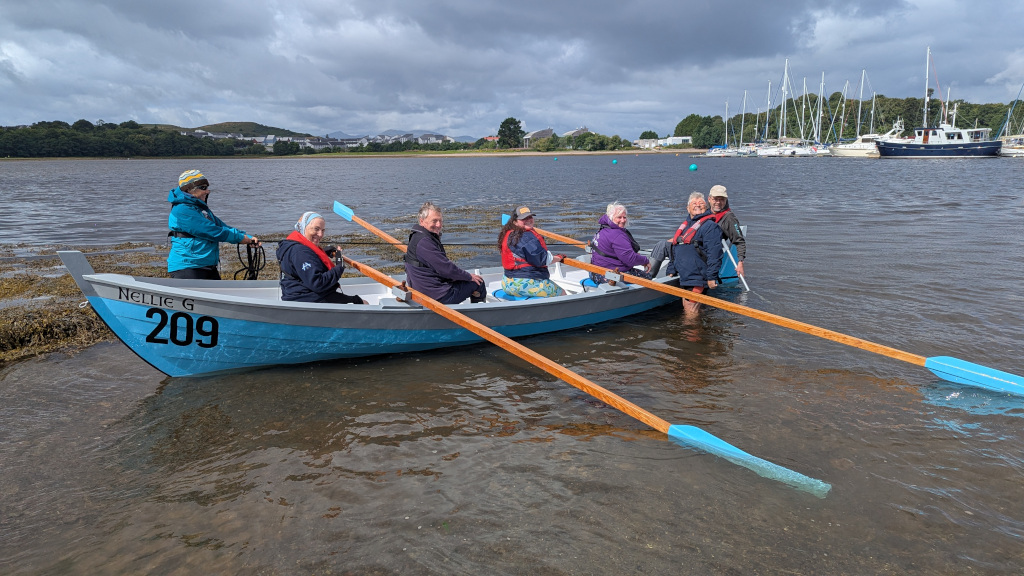
Using two St Ayles wooden rowing skiffs loaned from Lorn and Appin skiff clubs, the practical session had a crew of four rowers in each boat, with a trainee cox in the stern and a trainer sitting opposite them in the bow shouting instructions, encouragement and warnings in equal measure. All the rowers there that day were to take turns in the ‘learner’ cox seat, to get trained up in the effective use of commands, good manoeuvring techniques, and other tips n’ tricks. To be honest, each of us there that day admitted to being a bit anxious about what miracles we’d be asked to make the boat do. Both Eilish and myself were attempting coxing for the first time… We were in different boats, and slightly out of earshot of each other, which was possibly a good thing. If you know either of us, you’ll know that we don’t necessarily have an issue telling people what to do, but it does help if we first have an inkling of what we’re meant to do!
Each of the crews were all ears, listening carefully to the trainers’ instructions, observing how each trainee cox managed their role of being ‘in control’. The coxs were told how to instruct their rowers to weave the boats in and out of the yachts moored in the bay, putting the coxs through figure-of-eight exercises and backing onto mooring buoys (all the while us rowers had quite the healthy workout, performing these stop-start drills until the trainers were happy). As everyone finished their session in the cox seat, they swapped places with a rower who was then put through the same coxing hurdles.
Eventually the inevitable happened and it was my turn. OK, this was it. Be calm, be loud & clear, be calm, be decisive, be calm… did I mention we were all a bit anxious?! In the end, no-one drowned and nothing was broken, it was fine and actually a lot of fun. Once I’d got the hang of the strange dual pull-strings on the boat’s rudder (very different from a wheel or a tiller), I realised just how manoeuvrable these 22ft boats actually are. And being cox, at least you’re facing forwards (not like the poor rowers who’re facing backwards, so any natural instinct you might have for port and starboard is up the spout). You wouldn’t believe how small the turning circles of these skiffs can be, especially if the rowers on port and starboard each row in different directions – that sound like it wouldn’t work but believe me it does when it’s coordinated. A turning circle smaller than that of a Lidl’s trolley IF it has four working wheels!
In the end, no injuries, no tears and no expensive yachts bashed: all in all we thought we’d had a fantastic day relatively ‘in control’ on the water. The trick now is to not forget the commands and techniques before we get back into a rowing boat… Big thanks to Liz at Lorn for arranging the course.
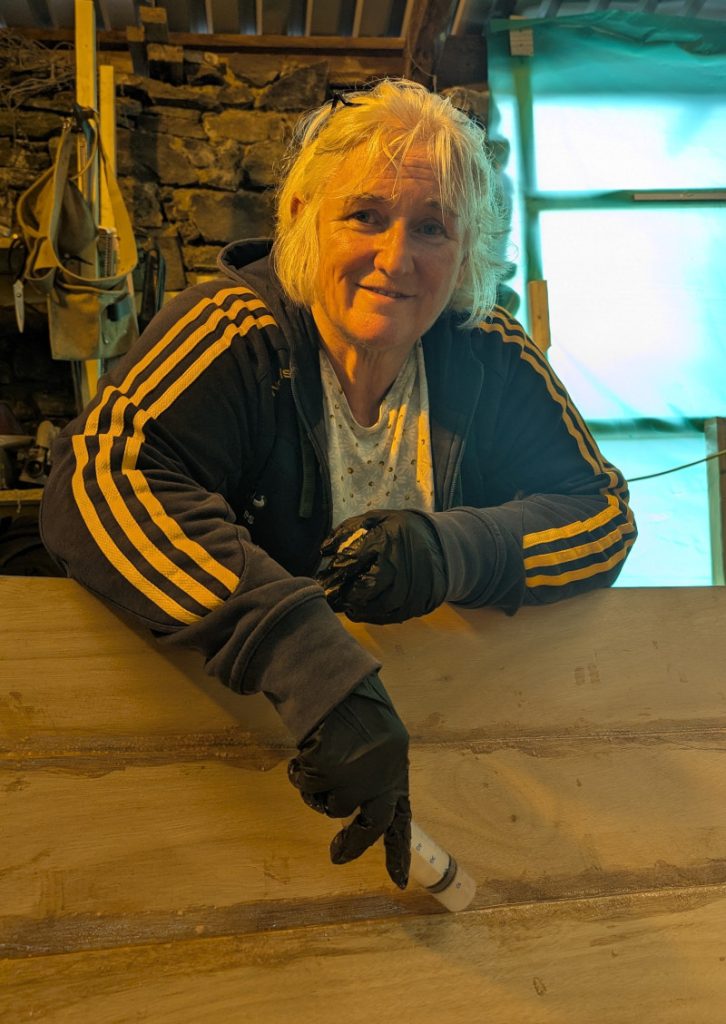
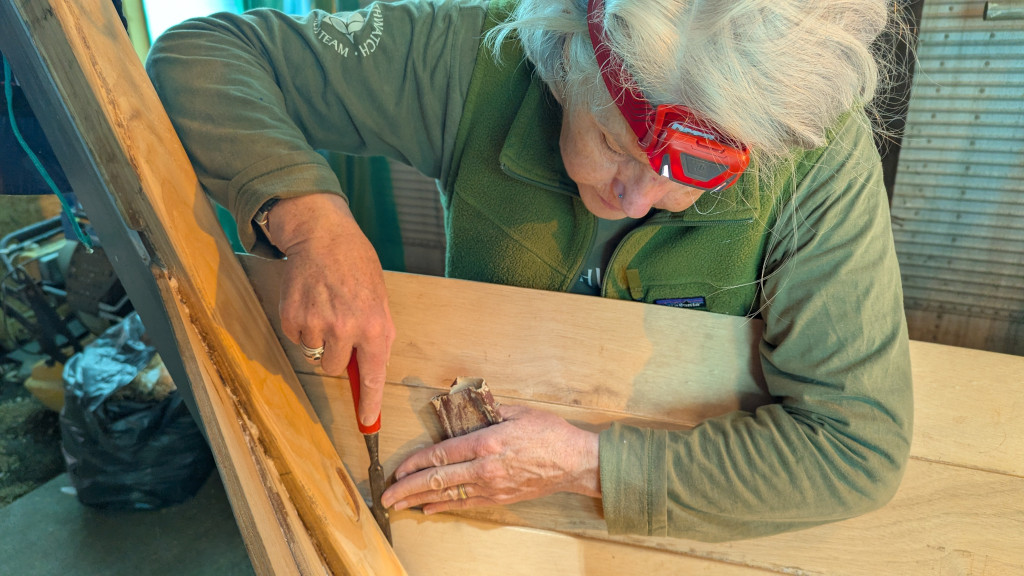
As our boat is still in-build, we want to hear from people who’ve worked with wood before. You don’t need to be a professional woodworker but help from semi-skilled or talented enthusiasts would be great. We meet up most Sat mornings at Kinlochmoidart. For more details, please get in touch with Eilish MacLellan or Lou Johnson.
Louise Johnson, Club Co-Chair