Skiff Build Update – April 2025
An update on the build process courtesy of Andrew and Colin.
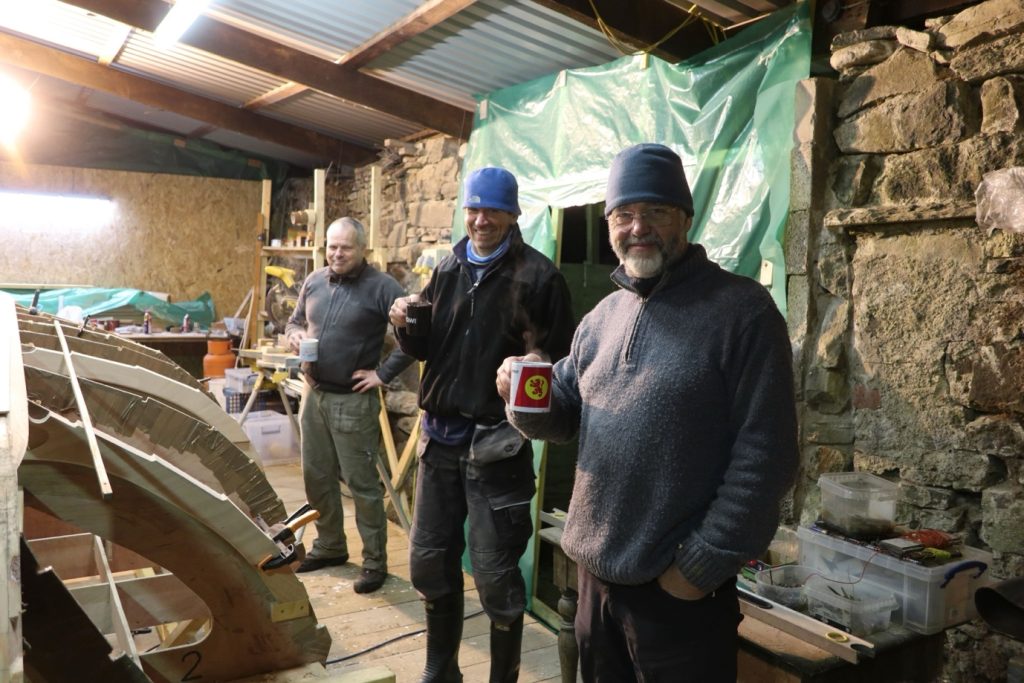
Building a boat in a freezing cold shed in the winter, in Moidart in the Highlands is a challenge; we have only a few hours a week and (for my part) it can involve a 1,000-mile road trip to and from Bath to keep things moving along. There are times where we turn up at the shed and it’s cold and wet and we wonder what on earth we have let ourselves in for.
And then… the lights come on, the big heater roars into life, the banter starts, and I realise that I am indeed very lucky to be working alongside an amazing group of highly talented, motivated new friends. I swore I would never build another boat again but boy am I glad I said yes to this project. I now feel ‘rooted’ in my new home here and I’m excited to be involved.
Many of you will have seen images of the aprons and stems being laminated and fitted to the build jig (these are the inner and outer curved bow and stern timbers).
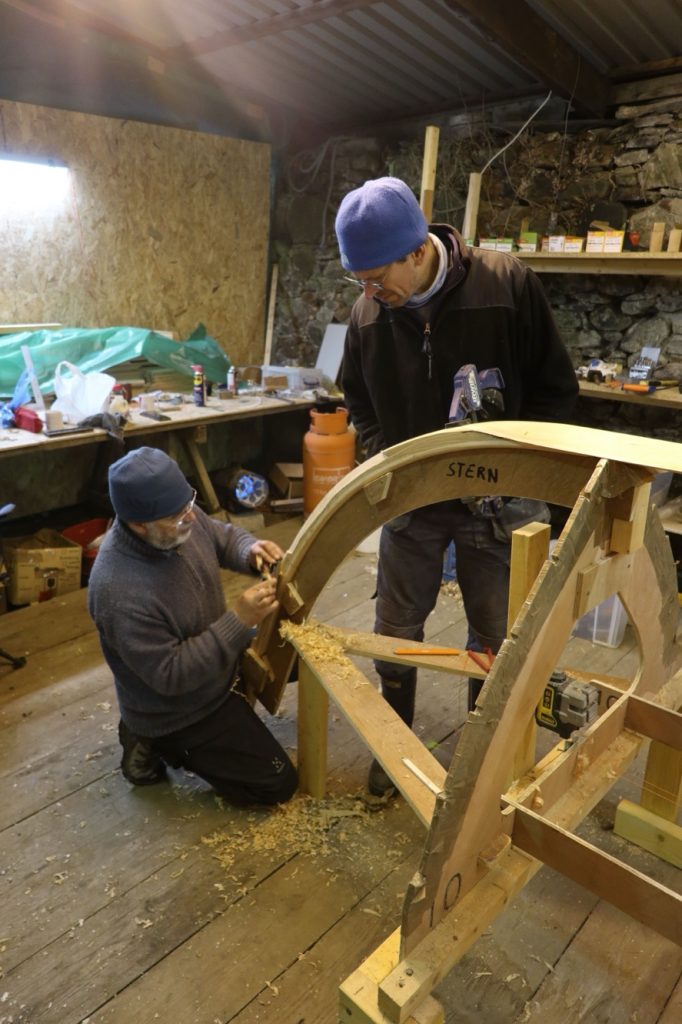
Since then, the Keelson (inner keel) has been scarfed (joined) and glued to the aprons and carefully shaped to take the planking (each plank joins the stem/stern at a slightly different compound angle and the structural members need to be shaped to achieve a good faying surface (the surfaces where the parts meet and are glued are called faying surfaces).
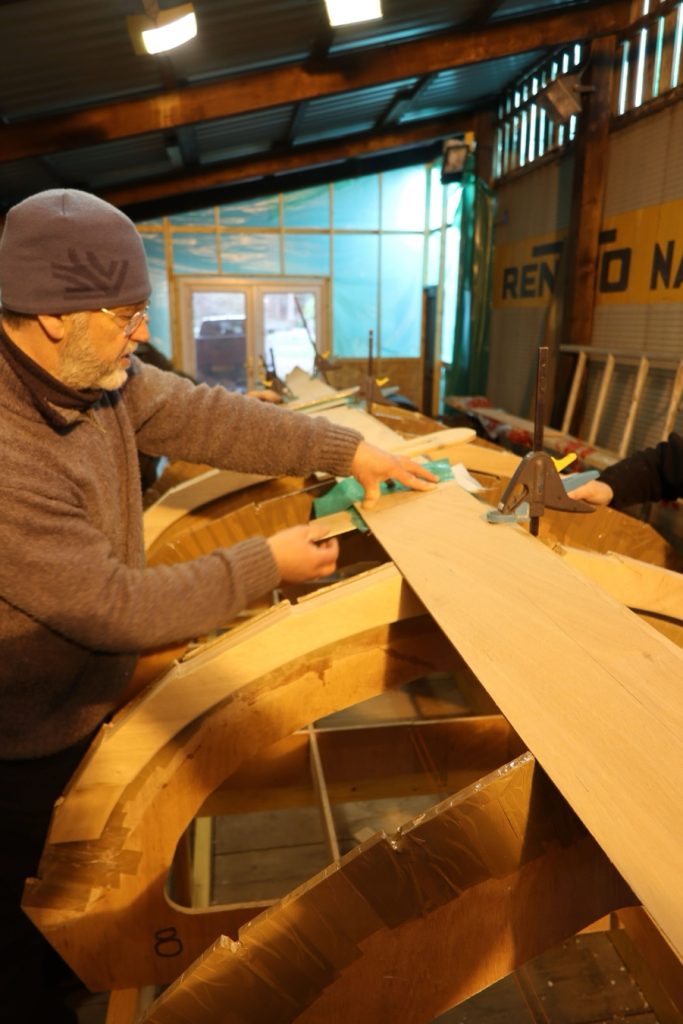
The first two planks to be hung are the Garboards, these lie along the keel and are a key structural part of the hull. The garboards are now in place and look fabulous – they are always tricky to fit and the process often involves a lot of swearing 😀 since they are almost vertical at either end where they join the stem / stern but near horizontal amidships where there is little deadrise (V shape in the hull).
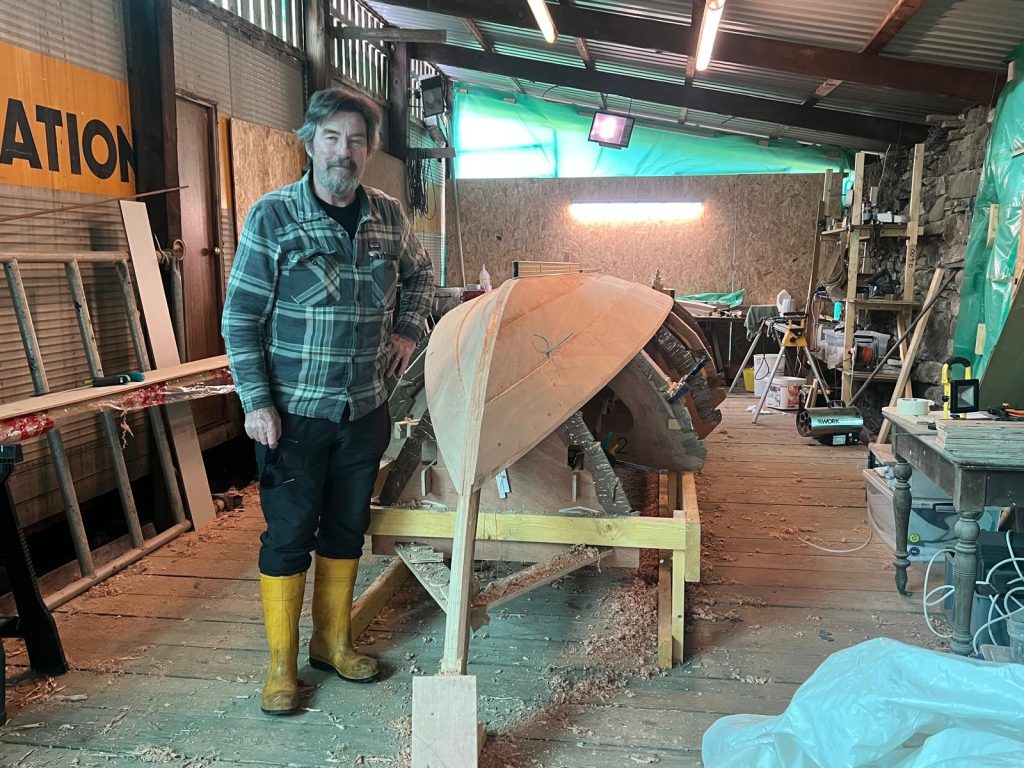
The next four planks (two planks either side) can be tricky too, but these are now glued in place and the next two are prepared, Gains and Lands have been planed (gains are where the planks taper into each other as they enter the stem and stern), the overlap gradually disappears and gives a really stylish look to the hull if done well. Lands are where each plank ‘lands’ on the next and form an overlap to keep the water out. So, when these planks (eight so far) are in place, the hull will be well over half-planked. I think she’d float as she is… albeit with only four inches of freeboard (freeboard being the distance from the waterline to the Gunwale – edge of the boat where the oars rest).
Apologies for all the boatbuilding terminology, but it’s an important part of the romance and mystique of this exciting nautical adventure! 😀